
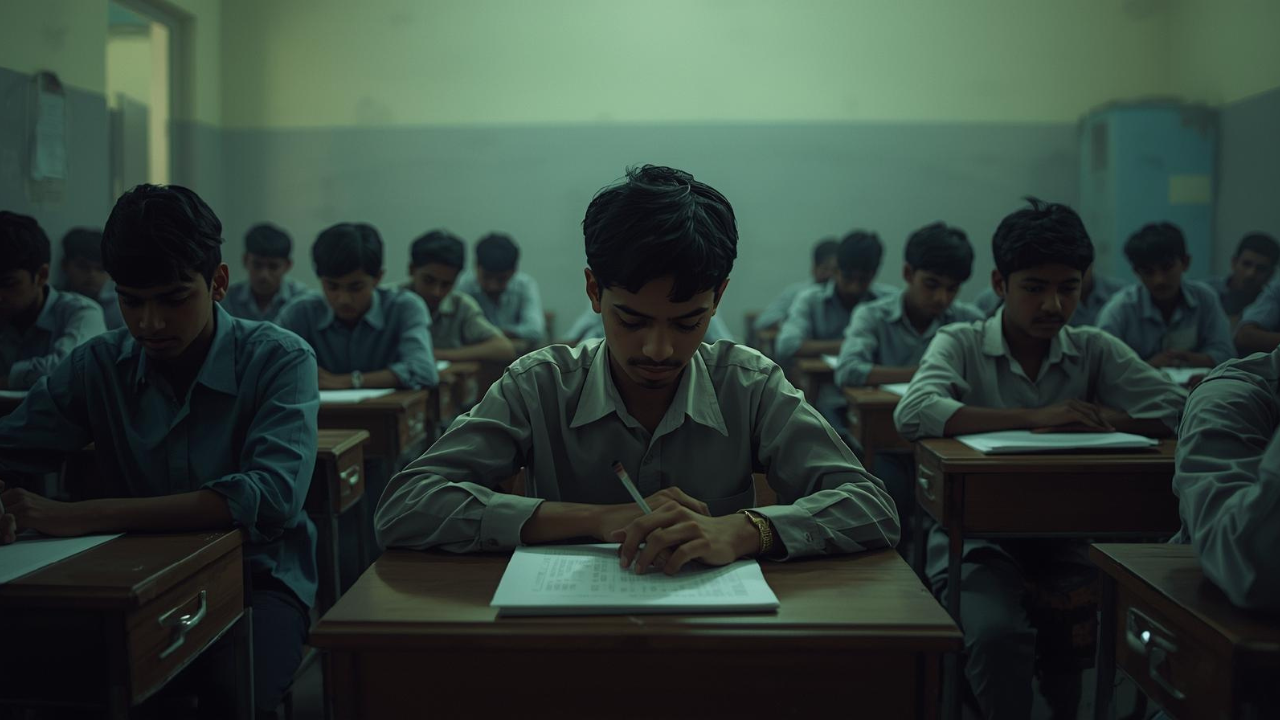
India’s education system rewards silence
India’s education system doesn’t intentionally silence students.
But over time, that’s exactly what it has learned to reward.
I say this with care, not criticism — because I am a product of this system too.
CBSE, ISC, big schools, good boards — yes, they exist.
But they are not all of India.
The real India is still sitting in classrooms where speaking up feels risky,
where asking questions feels embarrassing,
where silence feels safer than curiosity.
I live in Mumbai.
I know many schools here.
I coach teachers.
I’ve worked with school educators, college faculty, even higher education officers.
I sometimes sit with principals and vice principals.
And when I listen carefully, I realise something painful.
The problem is not education policy on paper.
The problem is what happens inside classrooms every single day.
Most classrooms still run on one invisible rule:
Don’t speak unless you are very sure.
Students quickly learn that raising their hand again and again is dangerous.
Classmates may tease you.
“You think you’re too smart?”
“You always want attention?”
Even teachers, often unconsciously, reinforce this silence.
Questions become safe, closed, predictable.
“Any doubts?”
The whole class says, “No, teacher.”
What if the question was:
“What did you understand today?”
“What confused you?”
“What would you explain differently?”
In most subjects, that never happens.
So children learn early:
Knowledge is private.
Voice is risky.
Confidence is optional.
And this has nothing to do with English alone.
I am not saying schools should only teach English.
I am saying schools should teach confidence.
They should teach courage.
They should teach the ability to show up, to speak, to take the mic — in any language.
Because no matter who you become — engineer, artist, politician, singer, doctor —
your ability to communicate confidently will shape your life.
I visit colleges across the country.
The pattern is heartbreakingly consistent.
Five, ten, maybe fifteen students dominate everything.
They answer.
They volunteer.
They get noticed.
The rest of the class disappears.
Not because they lack intelligence.
Not because they lack talent.
But because for years, silence was rewarded.
At home:
“Don’t talk too much.”
“Don’t talk back.”
“Stay quiet, even if you’re right.”
At school:
Marks mattered more than voice.
Obedience mattered more than expression.
So an entire generation learned to dim itself.
I meet young people in college — brilliant, warm, creative, full of potential.
And yet something feels missing.
Their energy has been slowly trained out of them.
Their questions feel heavy.
Their voices feel unsure.
They were told they talk too much.
They ask too much.
They feel too much.
And somewhere along the way, many of them stopped feeling anything at all.
This is why AI matters.
Not as a replacement for teachers — but as a support system.
AI can give teachers space.
It can give students a private, non-judgmental place to speak, practise, fail, try again.
Many teachers are already using it beautifully.
But policy alone won’t fix this.
What we need are brave educators.
Principals, vice principals, teachers who lead quietly but boldly —
who decide, in their own classrooms, to reward voice.
To reward curiosity.
To reward effort, not perfection.
Education’s job is not only to give degrees and marks.
It is to create confident, independent communicators.
If we don’t change this,
we won’t just produce silent classrooms —
we’ll produce silent adults.
And India cannot afford that anymore.