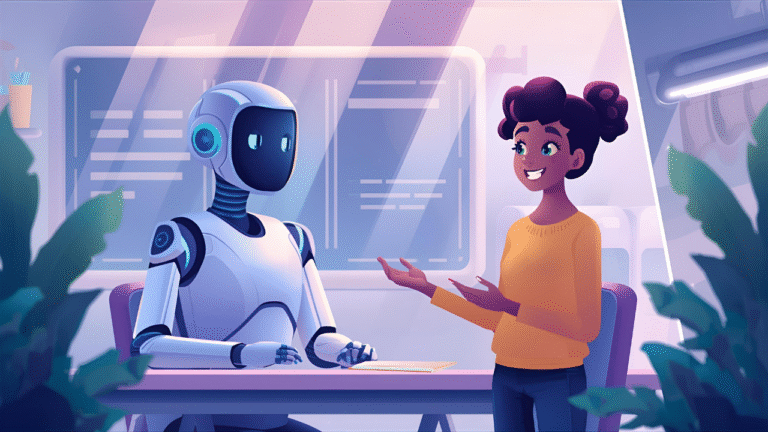

The English Divide in India — and How AI Can Bridge It
In India, two students can sit in the same exam hall, write the same answers, get the same marks — but the one who speaks better English will walk out with more confidence, more opportunities, and more respect. That’s the English divide.
It’s not about intelligence. It’s not about talent. It’s about exposure. Kids in English-medium schools in Delhi or Mumbai grow up switching between Hindi and English without thinking. Kids in government schools in small towns may be equally smart, but English feels like a wall they keep hitting. And by the time both meet in college or at a job interview, the gap is already wide.
I’ve seen it with my own eyes — a law student from Delhi and a law student from Bihar. Same intelligence, same dreams, but one speaks fluently and the other hesitates. And immediately, the world puts them in two different boxes. That’s the wall English has built in our country.
Now, what excites me is that AI can actually break this wall. Not in theory — in practice. Because AI doesn’t care where you studied, which medium, which city. It listens to you, and it gives you exactly what you need.
You can open your phone and say:
“I’m a nurse in a small-town hospital. Teach me the sentences I need to talk to patients in English.”
Or:
“I’m preparing for my MBA interview. Give me ten strong words I can use in group discussions.”
And in seconds, you have your customized English kit. Something no dictionary, no tuition center, no generic book could ever give you.
But here’s the key: this can’t just remain an individual trick. If AI is really going to bridge the divide, we need action at three levels.
One: Individuals. If you’re listening, start using AI daily. Stop wasting time on random word lists. Ask AI for the English you need in your life. Make it personal, make it practical.
Two: Institutions. Schools, colleges, NGOs, CSR funds — stop buying more grammar-heavy books. Start funding AI practice kits. Sponsor 5 students, 50 students, entire classrooms, so that every child, whether in a metro or a village, gets the same access to an AI coach.
Three: Culture. We need to shift the mindset. Stop seeing English as a test of class. Start seeing it as a survival skill that anyone can learn with the right tools. AI is that tool. It’s the great equalizer — but only if we embrace it openly, without fear.
So yes, the English divide is deep. But for the first time in history, we have a real bridge. Not another grammar book, not another coaching center — but AI. The question is whether we’ll use it. Whether we’ll make it available to everyone. Whether we’ll finally let English stop dividing us and start connecting us.
And that choice — that action — is in our hands right now.