
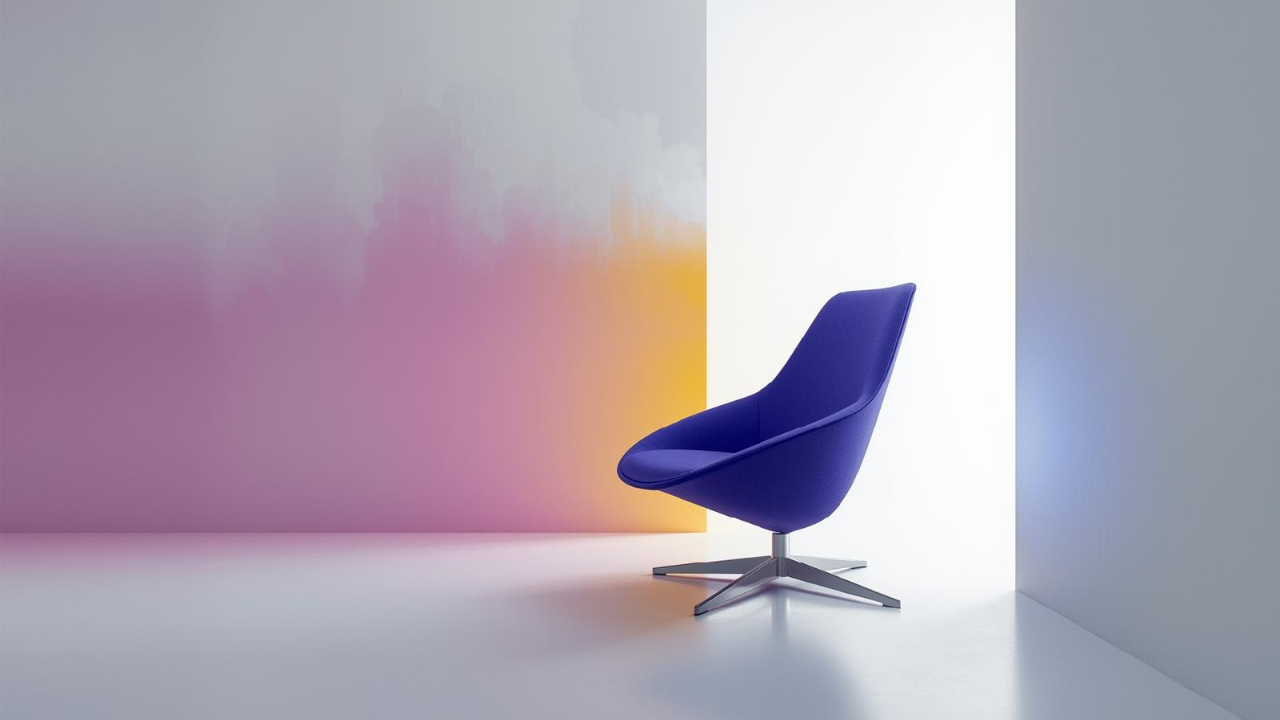
The Chair Closest to the Exit
There is a chair many of us choose without thinking.
The chair closest to the exit.
Not because it’s comfortable.
Not because it gives the best view.
But because it gives us escape.
I’ve seen this chair everywhere — in classrooms, seminar halls, literature festivals, corporate sessions, and colleges across India. And every time, it tells the same psychological story.
The Psychology Behind the Exit Chair
Some people sit far away from the centre of the room.
Some avoid the first row even when it’s empty.
Some quietly slide into the last row, close to the door.
Why?
Because visibility feels dangerous.
This behaviour doesn’t start in adulthood. It starts early — in school.
- Not raising your hand when the teacher asks a question
- Avoiding eye contact
- Praying your name isn’t called
- Sitting where you won’t be noticed
Indian classrooms trained many of us to avoid the spotlight, not because we lacked intelligence, but because we were scared of embarrassment, correction, laughter, or judgment.
Over time, this fear becomes invisible. We don’t even realise we’re avoiding visibility. We just say:
“I like sitting here.”
“I’m comfortable at the back.”
“I’ll speak later.”
But it’s not comfort.
It’s fear disguised as preference.
My Own Story With That Chair
I grew up attending literature festivals with my father — at places like Mehboob Studio and National Centre for the Performing Arts. He took me there regularly.
Even then, I chose the same chair — far away, near the door.
I attended events reluctantly.
I never sat in the front row.
I never wanted to be seen.
The first row gave a better view.
Better sound.
Better experience.
But I avoided it.
Not consciously.
Psychologically.
What Changed Everything
One day, I did something small but terrifying.
I sat in the front.
Then I asked a question.
Then I said hello first.
Then I spoke before being spoken to.
Nothing bad happened.
That’s how it always is.
The danger exists only in the mind.
Slowly, that habit changed my identity. That identity change led me to where I am today — a spoken English and confidence coach, working with people who are:
- Older than me
- More experienced
- More powerful
- More influential
Politicians.
Journalists.
Corporate leaders.
And I speak to them confidently.
Where I Come From (And Why This Matters)
I didn’t come from privilege.
- Hindi-medium schooling
- A non “hi-fi” environment
- Grew up in under-resourced areas
- Worked as a waiter at weddings with caterers
- My father was an honest Urdu journalist
- His last salary: ₹22,500
We struggled. We always had.
So when I say background doesn’t decide confidence, I say it with evidence — not motivation.
I know young people from:
- Villages near Kanpur
- Small towns in Bihar
- Chennai, Bengaluru, Dhanbad
- Semi-urban colleges and government institutions
They want to:
- Become CAs
- Break poverty cycles
- Speak confidently
- Become public speakers
- Lead conversations
They know they have something to say.
But when the moment comes — they go blank.
They don’t even know why.
The Real Root (Not the Leaves)
Most people try to fix this with:
- Grammar classes
- Accent training
- Vocabulary lists
These cut the leaves, not the roots.
The real roots are:
- Mindset – how you see visibility
- Knowledge – clarity, not overload
- Practice – real speaking, not theory
- Feedback – honest, continuous correction
This is the MKPF framework — and this is what my book and mission are built around.
Confidence is not talent.
It’s trained visibility.
One Simple Experiment for You
Next time you enter a room:
- Choose the front row
- Sit away from the exit
- Stay visible
Nothing will happen.
But you will change.
And that change compounds.
The day you stop choosing the chair closest to the exit,
you stop preparing to escape your own potential.
Change your seat.
Change your mindset.
A lot will change after that.
Keep reading.
Keep questioning.
And if this resonates — start with awareness.
That’s where confidence begins.



Loved to read the post, simple and genuine experience and could connect my cord, as it is everyone’s story with few people’s acknowledgement. The reading will inshallah make us conscious and help us all resolve the underlying issue to feel more free and confident …